Translate

Tuesday, January 27, 2015

Using the Zone Focusing Method for Street Photography

Using the Zone Focusing Method for Street Photography

No excuses! Why all photographers need to copyright their work


http://www.modelmayhem.com/education/photography/282-no-excuses-why-all-photographers-need-to-copyright-their-work

No excuses! Why all photographers need to copyright their work

As a copyright lawyer for the past 20 years, I’ve spoken to a lot of photographers whose work has been infringed. And because I’m a copyright lawyer, I’m always encouraging photographers to register their photographs with the U.S. Copyright Office. Yet so often when speaking to photographers, I hear a litany of excuses for why they can’t register the photographs with the copyright office:

• “It’s too expensive.”
• “It’s too difficult.”
• “Copyright protection exists upon creation, so I can wait until after the infringement to register the photo.”
All of these excuses are not only wrong, but they are also potentially costing the photographer tens of thousands of dollars. This article will explain why registering your photos with the Copyright Office has never been easier–and how a registration could mean the difference between getting rich or getting ripped-off.

Excuse #1–”It’s too expensive”

Many photographers are under the mistaken impression that every photograph has to be registered separately. At $35 a pop, that would add up really quickly. But that is just not true.  Using Form GR/PPH/CON, a photographer can register up to 750 published photographs for the $35 fee. The requirements are that:

• all the photographs are by the same photographer (if an employer for hire is named as author, only one photographer’s work can be included),
• all the photographs are published in the same calendar year, and
• all the photographs have the same copyright claimant.
If you would like to register more than 750 photographs, you can still do so with a single filing fee using Form VA if you identify the date of publication for each photograph on the images deposited with the application.

Excuse #2–”It’s too difficult”

Anyone who says that registration is too difficult simply hasn’t done it. It is sometimes time consuming, but if you know your name, address, citizenship, and the year of creation of the photos, you have the intelligence to register your photos with the copyright office. The Copyright Office has a number of circulars that explain how to fill out the form, including a few specifically addressed to photographers. And the Copyright Office is currently allowing, on a trial basis, electronic registration of groups of published photographs. To be eligible for this trial, call the Visual Arts Division at (202) 707-8202.

One thing you should be aware of: The Copyright Office makes a distinction between “published” and “unpublished works.” A work is considered “published” not only if it was distributed to the public, but also if the photographer distributed copies to a group of people for purposes of further distribution or public display. This is important for paparazzi photographers who might immediately send out a group of photos to various magazines or websites for purchase. Even if all of them are not used, they can all be considered “published.”

Excuse #3–”I can wait until after the infringement to register the photo.”

It is true that the photographer owns the copyright immediately upon creation. But as a practical matter, registration is imperative if you want to be able to sue someone for infringing your work. That is because the Copyright Act gives the photographer different forms of relief, depending on whether the photo was registered at the time of the infringement (or within 90 days of the photo’s publication).

If a registered work is infringed, the photographer can claim statutory damages of up to $30,000 and of up to $150,000 if willful infringement is proved. The photographer can also recover his attorney’s fees, which easily add up to tens of thousands of dollars.

But if the photographer did not register the photo before the infringement (or within 90 days of publication), then he can recover only his actual damages, plus any profits of the defendant attributable to the infringement.

Let’s take a hypothetical case and see how that plays out.

Mary, an aspiring nature photographer, posts photographs of her trip to the Grand Canyon on her blog. One of her photos is taken by an unscrupulous ad agency and used in the background for a series of travel brochures.

Scenario #1–Mary Did Not Register the Photograph

If Mary wants to sue, all she could get would be her actual damages. Because Mary is not yet an established photographer, her best sale to date was for $1,000. So, if she sued, the most she could get would be $1,000 (or possibly some small multiple of that). But because her attorney wants $10,000 to file the case, it doesn’t make economic sense for her to file the lawsuit. It will cost her more than she would ever recover.

Although, in theory, Mary could also obtain the infringer’s profits related to use of the photograph, the reality is that proving those profits would be very expensive. The process would almost certainly cost more in expert’s fees and attorney’s fees than she would ever recover. As a result, Mary does not file a lawsuit and ends up recovering nothing.

Scenario #2–Mary Did Register the Photograph

In this case, Mary can seek statutory damages for willful infringement. And she can obtain attorney’s fees in the lawsuit. She hires a lawyer (who is now willing to work on a contingency-fee basis). The lawyer writes a letter to the advertising agency. A little back and forth, and the matter is settled for $20,000 a few weeks later. Not a fortune, but a nice payday for the use of one photograph.

Now, obviously, this scenario is just an example, and the results will change depending on a number of factors. But as a general rule, the $35 spent on registering your photos with the Copyright Office will be the best money you ever spent.


DISCLAIMER: Legal information is not the same as legal advice. Information of a legal nature posted or made available on this website is not intended as legal advice. It is intended for general informational purposes only and you should not rely on it.  It is not a substitute for consultation with an attorney licensed to practice in your jurisdiction.

Larry Zerner

Larry Zerner is an entertainment lawyer in Los Angeles representing actors, writers, directors, producers and others in the entertainment field. More information can be found at www.zernerlaw.com.

More Posts

Friday, August 8, 2014

Traveling Light: Putting Together a Photography Kit for Travel


Traveling Light: Putting Together a Photography Kit for Travel

Taking photographs on holiday or whilst traveling for any other reason is one of the things many of us look forward to. The problem is travel, and in particular air travel, has become hard work – baggage weight and size limits, limits on liquids all add up to a potentially stressful journey. When you get to your destination, it may be hot and full of tourists, not the sort of place for carrying a heavy load of kit. Today we are going to look at some options for traveling light.

The Camera

Obviously this is the most important part in the kit, and you might consider that taking our pro level DSLR is the only option. In reality, image quality between high end DSLRs and more consumer level cameras is negligible these days. If you have a secondary lower level DSLR body, consider taking that and a compact for back up. You will gain significant space and weight savings and your camera will be less of a target for thieves. If you travel a lot, it is well worth considering a mirrorless system. Cameras such those from Fuji and Olympus have extensive lens systems, and fantastically light and small and produce image quality on a par with or even exceeding equivalent DSLRs
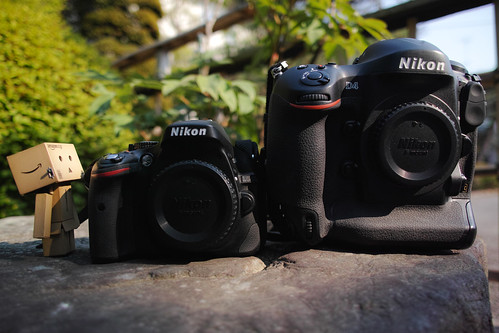
D5200 is compact enough to carry everyday and everywhere
Consider a smaller camera, even a mirrorless system. Photo by Takashi Hososhima

Lenses

Whilst it might be tempting to take the big gun f2.8 zooms, in reality they are a significant drag in terms of both weight and size. A 24-70 and 70-210 f2,8s will add 2-3 kgs of weight to your bag. Some other options are to take a carefully selected set of fast primes or perhaps a single super zoom. Modern super zooms in the 18-200 range have vastly improved optics over their predecessors and will cover virtual all the focal lengths in one lens. Returning to mirrorless systems, again the lenses are significantly smaller yet with superb quality, another option to consider.
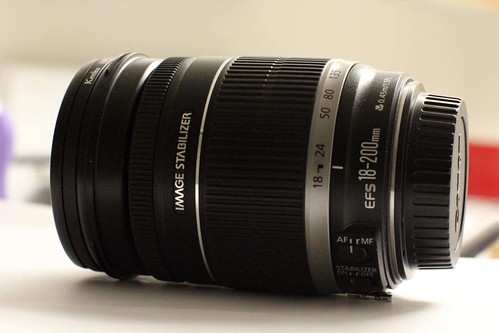
IMG_2460: Canon Zoom Lens
A superzoom may replace several lenses. Photo by EagleCam

The Bag

We spend so much time considering our camera and lenses yet so little on the the bag to carry them. A good travel bag's first priority is simple. It must fit inside the baggage dimensions of most major airlines. Putting your beloved equipment in checked luggage is not an option that should ever be considered. Beyond that, the bag needs to be comfortable, remember you may wear this many hours per day, the load should be spread evenly, it should be sturdy enough to withstand the knocks and bumps of day to day travel and it should be waterproof. Backpack or over the shoulder is an entirely personal preference but either way the bag should be easily accessible.

The Tripod

A tripod is an interesting dilemma for any traveling photographer. With high ISO quality so good now you may consider not taking one. However, if you are looking to do any shots that will involve conveying motion, car headlight trails, ethereal misty waterfalls etc, you are going to need a tripod. The best option here is a set of lightweight carbon fibre legs and a ball and socket head. Although not cheap, carbon fibre legs are often half the weight of regular aluminium or steel tripods. A ball and socket head is generally smaller and lighter than a pan and tilt and quicker to use. The downside is they are not quite as easy to position accurately. As an alternative you can also consider a lightweight monopod, with good technique these can be invaluable bits of kit.
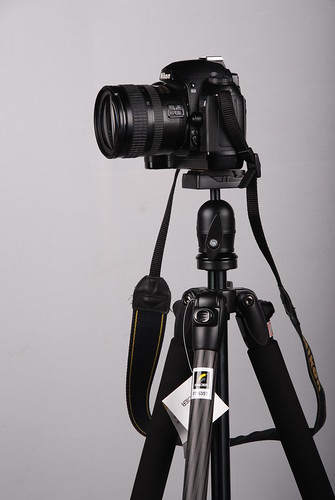
WF Fancier 535 carbon fiber tripod
Carbon fibre tripods save significant weight. Photo by F 5.6

Flash

Flashguns are another dilemma when traveling. If you are the sort of person that likes to take outdoor portraits of locals then a flash might be well worth taking. Its worth looking for a smaller less powerful model to save space and weight. Don't forget also that batteries and chargers are all going to add weight too.

Filters

The obvious option for filters is to use a square filter system such as Cokin or Lee. The advantages are that you only need one of each filter plus a filter ring adapter for each lens as opposed to potentially a set of circular filters for each lens. If you already have a set of circular filters, the other options here are step down rings. These allow you to adapt a larger filter to fit on a smaller lens.
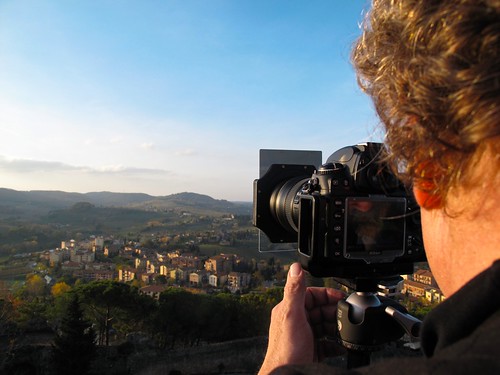
At Work
A Square filter system minimizes the need for duplicates. Photo by Mark Mitchell

Traveling as a photographer should be fun and stress free. For it to be that way, we need to make informed decisions on what kit we take with us. Think about the types of shots you generally take and build your kit around that. For the ultimate in creative freedom, consider taking one camera and one prime. You will find the restrictiveness of a single lens will actually make you much more creative in your approach.
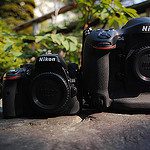
Traveling Light: Putting Together a Photography Kit for Travel

Taking photographs on holiday or whilst traveling for any other reason is one of the things many of us look forward to. The problem is travel, and in particular air travel, has become hard work. When you get to your destination, it may be hot and full of tourists, not the sort of place for carrying a heavy load of kit. Today we are going to look at some options for traveling light.